+86 15968093247


China Top 10 Denim Skirt Manufacturers for Global Buyers offers a practical starting point for sourcing teams. China remains a major apparel manufacturing center, supported by fabric mills, skilled sewing workers, and export experience. However, a strong supplier is not defined by scale alone. Product consistency, communication, compliance, and delivery discipline matter equally.
This guide examines manufacturers producing different Denim Skirts, from classic five-pocket styles to asymmetric midi designs. Buyers should compare fabric weight, stretch recovery, colorfastness, zipper quality, and waistband construction. A reliable factory should provide clear samples, detailed size charts, production timelines, and inspection records. Factory experience also matters. A supplier familiar with international retail requirements may prevent costly fitting and labeling errors.
The selection process should include more than online photographs. Request fabric swatches, wash samples, stitching close-ups, and recent production references. Where possible, arrange factory audits or use qualified third-party inspection services. Certifications can support trust, but they should be verified and matched to the actual facility. Public supplier information is sometimes incomplete. Rankings may change as capacity, management, and quality systems develop. No manufacturer is perfect. A factory may offer excellent pricing but weaker sampling speed, or strong craftsmanship with higher minimum order quantities. Careful comparison helps global buyers choose partners that fit their market, budget, and long-term product plans.
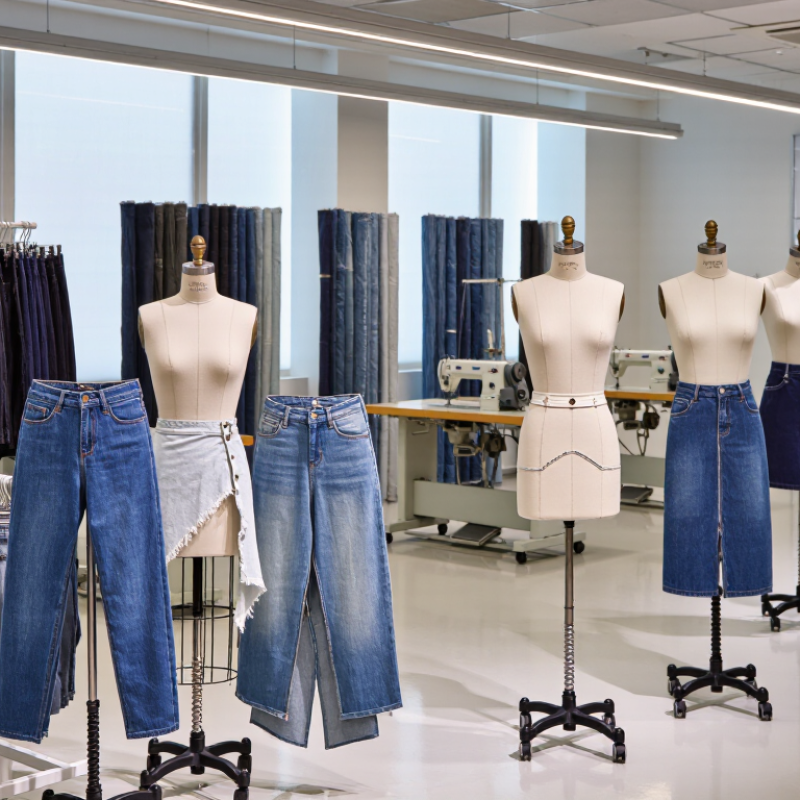
China’s denim skirt manufacturing sector covers a broad range of suppliers, from large production facilities to specialized workshops. Global buyers can compare China’s top ten manufacturers by capacity, technical control, and export experience. Many factories offer full-service production, including fabric sourcing, pattern development, cutting, sewing, washing, and packaging. Their expertise supports mini, midi, maxi, cargo, A-line, and stretch denim skirts. Production quality varies, however. A low sample price may hide weaker fabric recovery or inconsistent sizing.
Experienced manufacturers understand denim behavior after washing. They test shrinkage, colorfastness, seam strength, and dimensional stability before bulk production. Skilled technicians can adjust waistband construction, pocket placement, slit design, and hem finishing. Small details matter. A skirt may look attractive on a sample table but feel restrictive during movement. Reliable suppliers usually provide pre-production samples, measurement charts, and inspection records. Buyers should also confirm minimum order quantities, lead times, fabric composition, and corrective-action procedures.
Tips: Request washed samples in several sizes. Check measurements after laundering, not only before it. Ask for fabric weight and stretch percentages. Review stitching around pockets and side seams. Factory visits or independent inspections can reveal workflow problems. Communication still needs improvement in some factories, so record every specification clearly. Do not rely on photos alone.

Denim skirt manufacturers commonly develop products across lightweight, midweight, heavyweight, and rigid denim specifications. The chart shows the upper end of representative fabric-weight bands used in product development, measured in ounces per square yard (oz/yd²). Lightweight denim supports softer fashion silhouettes, while heavier denim provides greater structure and durability.
The figures represent common material specification ranges for denim product development and are not company-specific production or sales data.
Selecting a reliable denim skirt manufacturer requires more than comparing online prices. Examine fabric quality, production control, communication, and delivery performance. Experienced buyers should request fabric swatches and finished samples before placing bulk orders. Check denim weight, stretch recovery, shrinkage, and colorfastness after washing. A sturdy 10–12 ounce fabric may suit structured skirts, while lighter denim improves summer comfort. Ask whether the factory manages cutting, sewing, washing, and packing in-house. Fewer handovers can reduce inconsistency. However, factory size alone does not prove reliability.
Review the manufacturer’s quality procedures and production records. A dependable supplier should explain measurement tolerances, needle control, inspection stages, and corrective actions. Request a pre-production sample with approved measurements, stitching density, hardware, labels, and wash effects. Visit the facility when practical, or arrange a documented remote audit. Clear payment terms and realistic lead times matter too. A low quote can hide weak fabric or unexpected finishing costs. We once judged a supplier too quickly from polished photos; the bulk sample revealed uneven hems. That experience remains useful.
Tips: Compare at least three suppliers using the same technical sheet. Test samples after two or three washes. Ask for recent capacity evidence, not promises. Confirm applicable export documents and responsible labor practices. Keep written approval records. Small details prevent expensive misunderstandings.
China Top 10 Denim Skirt Manufacturers for Global Buyers
Profiles of the Top 10 Chinese Denim Skirt Manufacturers
The ten manufacturers profiled here represent China’s strongest denim skirt supply clusters, including Guangdong, Zhejiang, Jiangsu, and Fujian. Their capabilities differ. Some focus on small-batch sampling, while others manage high-volume production for international buyers. Each profile examines fabric sourcing, washing technology, pattern development, quality control, and export experience.
According to Grand View Research, the global denim jeans market was valued at over USD 70 billion in recent years, supporting continued demand for denim apparel. Denim skirts benefit from this wider market, especially through vintage washes, stretch fabrics, cargo details, and adjustable waist designs. The featured factories commonly offer cotton-rich denim, recycled fibers, enzyme washing, laser effects, and nickel-free hardware. These details matter. A clean hem and stable waist can decide whether a sample succeeds.
China’s General Administration of Customs reported apparel exports exceeding USD 150 billion in 2023, showing the country’s continuing manufacturing depth. However, production scale alone proves little. The profiles also consider fabric testing, shrinkage control, inspection records, lead times, and communication quality. Certifications such as ISO 9001, GRS, and OEKO-TEX may strengthen supplier evaluation, but buyers should verify current documents directly. A factory may present impressive machinery yet struggle with complex skirt grading. That weakness deserves attention. The ranking is useful, but not perfect; sampling, factory audits, and wash tests remain necessary before purchase decisions.
| Profile | Manufacturing Cluster | Primary Product Strength | Typical MOQ | Sample Lead Time | Denim Options | Customization Services | Common Compliance Documents | Suitable Buyer Type |
|---|---|---|---|---|---|---|---|---|
| 01 | Guangdong | Fashion-forward women's denim skirts | 100–300 pcs/style | 7–12 days | Stretch, rigid, washed, recycled-cotton blends | Pattern development, washes, trims, private labels | Fabric composition, colorfastness, REACH-related test reports | Online fashion brands and boutiques |
| 02 | Jiangsu | Consistent bulk production and quality control | 300–800 pcs/style | 10–15 days | Lightweight, midweight, comfort-stretch denim | Size grading, embroidery, screen printing, hardware selection | Inspection reports, fiber-content testing, social-audit records | Department stores and established importers |
| 03 | Zhejiang | Trend-led designs for seasonal collections | 100–500 pcs/style | 7–14 days | Acid wash, vintage wash, colored denim, ecru denim | Tech packs, sampling, distressing, embellishment | Product testing, restricted-substance documentation, packing records | Private-label start-ups and seasonal brands |
| 04 | Shandong | Cost-efficient mid-market denim programs | 500–1,000 pcs/style | 10–16 days | Rigid cotton, stretch denim, basic indigo shades | Basic pattern changes, labels, buttons, packaging | Pre-shipment inspection, composition reports, carton specifications | Wholesale distributors and value retailers |
| 05 | Hubei | Denim bottoms with strong washing capability | 300–600 pcs/style | 10–14 days | Stone wash, enzyme wash, bleach effects, soft denim | Wash development, whiskering, hem treatments, fit adjustments | Wash-process records, colorfastness reports, final inspection reports | Casualwear brands and overseas wholesalers |
| 06 | Fujian | Athleisure-inspired and comfort-fit denim skirts | 200–500 pcs/style | 8–14 days | High-stretch, lightweight, cotton-polyester blends | Elastic waistbands, functional pockets, custom size ranges | Material test reports, needle-control records, inspection documents | Contemporary casualwear and comfort-fashion labels |
| 07 | Guangdong | Small-batch production and rapid sampling | 50–200 pcs/style | 5–10 days | Deadstock, recycled, rigid, and fashion-colored denim | Prototype sampling, artwork placement, custom packaging | Material declarations, sample approval records, quality checklists | Emerging designers and direct-to-consumer brands |
| 08 | Jiangsu | Uniform, workwear, and practical denim skirts | 500–2,000 pcs/style | 12–18 days | Durable cotton denim, twill-denim blends, easy-care fabrics | Functional design, reinforced seams, bulk size grading | AQL inspection records, fabric specifications, packing lists | Uniform suppliers and institutional buyers |
| 09 | Zhejiang | Premium finishing and sustainable-material programs | 300–800 pcs/style | 12–20 days | Organic cotton, recycled fibers, low-impact and soft finishes | Sustainable trims, special washes, traceability support | Fiber certificates where applicable, test reports, supplier declarations | Premium labels and sustainability-focused retailers |
| 10 | Shandong | Large-volume basic styles for international distribution | 1,000–5,000 pcs/style | 14–21 days | Midweight indigo, black denim, cotton-rich blends | Standardized fits, label application, export packaging | Pre-production samples, inspection reports, export packing documents | Importers, chain retailers, and volume wholesalers |
Note: MOQ and lead-time figures are typical sourcing ranges and should be confirmed with the selected factory according to fabric availability, design complexity, order volume, and testing requirements.
Comparing Customization, Quality, Pricing, and Production Capacity
China’s denim skirt sector serves retailers, private labels, and online sellers worldwide. For global buyers, the real comparison involves more than factory size or attractive catalog photos. Customization begins with fabric weight, wash effect, waistband shape, pocket design, and size grading. Factories may support laser patterns, embroidery, recycled fibers, and special trims. Ask for a prototype before approving bulk production. Small details matter.
Quality depends on controlled processes, not promises. Request fabric composition records, colorfastness reports, measurement charts, and pre-shipment inspection photos. Inspect zipper strength, seam density, hem consistency, and shrinkage after washing. Some suppliers produce excellent samples but struggle with larger orders. That risk deserves attention. A trial order can reveal weak stitching, uneven fading, or delayed corrections.
Pricing should include fabric, washing, trims, packaging, inspection, and shipping preparation. Compare complete quotations, not only the unit price. Low pricing can hide high minimum quantities or limited revision support. Production capacity also requires evidence. Request monthly output, current order load, lead-time ranges, and contingency plans for fabric shortages. During factory visits, observe cutting tables, washing controls, and finished-goods storage. Still, no supplier is perfect. A detailed scorecard helps buyers balance customization, quality, pricing, and capacity without trusting one impressive meeting.
For global buyers, comparing China’s top denim skirt manufacturers requires more than viewing polished websites. Verification starts with a live video tour or an independent factory visit. Ask to see cutting tables, sewing lines, washing areas, and final inspection stations. Record the factory’s legal name, address, production capacity, and main export markets. A trading office may present itself as a factory. That distinction affects pricing, control, and accountability.
Request development samples using your actual fabric weight, color, waistband construction, and size chart. Inspect stitch density, zipper movement, pocket reinforcement, hem consistency, and shrinkage after washing. A useful test includes measuring the skirt before and after laundering. Ask for recent audit reports, material traceability, workplace policies, and product testing records. Check certifications relevant to your destination market. Documents should be verifiable, not merely colorful PDF files. Independent testing can expose weaknesses that a sample hides.
Before partnering, confirm minimum order quantities, sample fees, lead times, inspection points, packaging, and remedy terms in a written agreement. Use a staged approval process: fit sample, pre-production sample, then random final inspection. Keep communication in shared records. Small details matter. One overlooked measurement can affect an entire shipment. No checklist is perfect. Buyers should review suppliers after the first order, examining defect rates, delivery performance, and response speed. A manufacturer that accepts clear feedback is often safer than one promising everything immediately.