Top 10 Types of Knitted Wear for Global Buyers?
Global buyers need more than attractive samples when selecting Knnited Wear. They must compare structure, fiber content, sizing, comfort, and commercial value. A soft sweater may feel excellent in a showroom, yet lose shape after repeated washing. Small details matter.
This guide explores the top 10 types of knitted wear, including sweaters, cardigans, pullovers, vests, knit dresses, skirts, scarves, hats, gloves, and knitted sportswear. Each category serves different climates, customer groups, and retail channels. Lightweight cotton works well for mild seasons, while wool blends offer greater warmth. Acrylic can support cost control, but its breathability and pilling performance require careful testing.
Specifications should be clear.
Experienced buyers often request pre-production samples, fabric composition reports, measurement charts, and color standards. They should also review stitching density, seam strength, shrinkage, and packaging conditions. Reliable suppliers can explain production capacity, quality controls, lead times, and replacement procedures. Independent testing may strengthen confidence, especially for children’s products or skin-sensitive markets.
No category is universally best.
A cardigan suitable for European autumn may feel too warm in Southeast Asia. A fashionable oversized shape may also create grading problems across international sizes. Even experienced teams can overlook these differences. That is why this overview focuses on practical comparison rather than trend claims alone. It aims to help global buyers make informed choices, reduce avoidable sampling costs, and build collections that perform beyond the product photograph.
Knitted Wear Fundamentals and Classification Criteria
Top 10 Types of Knitted Wear for Global Buyers
Knitted wear is classified by structure, fiber, gauge, finishing, and end use. The ten common types include T-shirts, polo shirts, sweaters, cardigans, hoodies, sweatshirts, knit dresses, skirts, leggings, and knitted accessories. Fiber content matters because cotton feels breathable, wool provides insulation, and synthetic fibers improve stretch and drying speed. Blended yarns can balance these qualities, but labels must show exact percentages.
Gauge describes stitch density. Fine-gauge knits look smooth and suit lightweight tops, while coarse-gauge knits create warmth and visible texture. Buyers should also check stitch formation, such as jersey, rib, interlock, cable, and jacquard. Rib structures offer recovery around cuffs. Cable structures add thickness and visual depth. These details affect shrinkage, pilling, drape, and production cost.
Textile Exchange’s Materials Market Report 2024 recorded about 124 million tonnes of global fiber production in 2023. It projects production could reach 160 million tonnes by 2030, increasing pressure on material selection and traceability. The International Wool Textile Organisation also emphasizes fiber testing and responsible wool practices across the supply chain. In practical sourcing, buyers should request GSM, dimensional stability, colorfastness, pilling results, and wash-care performance. A heavier knit is not automatically better. That shortcut can mislead. Small gauge changes may alter fit, packing volume, and seasonal suitability. Classification is useful, but real product evaluation still needs samples, testing, and honest supplier communication.
Knitted T-Shirts and Polo Shirts for Casual Global Markets
Top 10 Types of Knitted Wear for Global Buyers?
Knitted T-shirts and polo shirts remain practical choices for casual global markets. They fit warm commutes, weekend travel, and indoor workspaces. A reliable T-shirt needs stable ribbing, clean shoulder seams, and a smooth hand feel. Polo shirts require stronger collars and careful placket construction. Textile Exchange’s Materials Market Report 2024 estimates global fiber production reached 124 million tonnes in 2023. Polyester represented about 59%, while cotton accounted for approximately 22%. These figures show why buyers compare comfort, durability, and fiber sourcing before placing large orders.
Tips: Request fabric swatches first. Test shrinkage after washing. Check colorfastness under strong light. A 180–220 GSM cotton jersey often suits everyday T-shirts, while 200–240 GSM pique can give polos more structure. However, GSM alone can mislead. Yarn quality, knitting tension, and finishing also change the final result. This is where inexperienced sourcing decisions become expensive.
For global casual programs, offer several fits rather than one universal block. Relaxed silhouettes may perform well in warm markets, while regular fits support uniform ordering. Recycled polyester can improve drying speed, but it may feel less breathable in humid conditions. A 100% natural-fiber story sounds appealing, yet it is not automatically the best solution. Buyers should review test reports, measurement tolerances, and packaging moisture control. Small details matter: a twisted side seam can make a premium polo look careless after one wash.
Sweaters and Pullovers for Versatile Seasonal Dressing
Sweaters and pullovers remain practical choices for global buyers seeking versatile seasonal dressing. Their value comes from easy layering, dependable warmth, and broad styling potential. A fine-gauge pullover works over a shirt in early autumn. A heavier knit suits colder commutes and indoor spaces.
Material selection needs careful attention. Merino wool offers warmth and natural odor resistance, while cotton feels breathable in mild climates. Blended yarns can improve durability, shape retention, and price control. However, no fabric solves every climate. A dense wool sweater may feel excessive in humid regions. Buyers should check yarn composition, gauge, weight, stretch recovery, and washing instructions before ordering.
Fit also affects commercial performance. Relaxed silhouettes support layering, but oversized shoulders can create costly returns. Crew necks sell broadly, while half-zips and mock necks add seasonal variation. In production reviews, I have found that sleeve length and rib elasticity deserve more attention than expected. Small measurement errors become obvious after repeated wear. Color planning should include neutrals, muted seasonal tones, and a few stronger shades. The strongest assortment is not always the most fashionable one. It is the one that remains useful across changing temperatures, customer preferences, and delivery schedules.
Cardigans and Vests for Layered Retail Collections
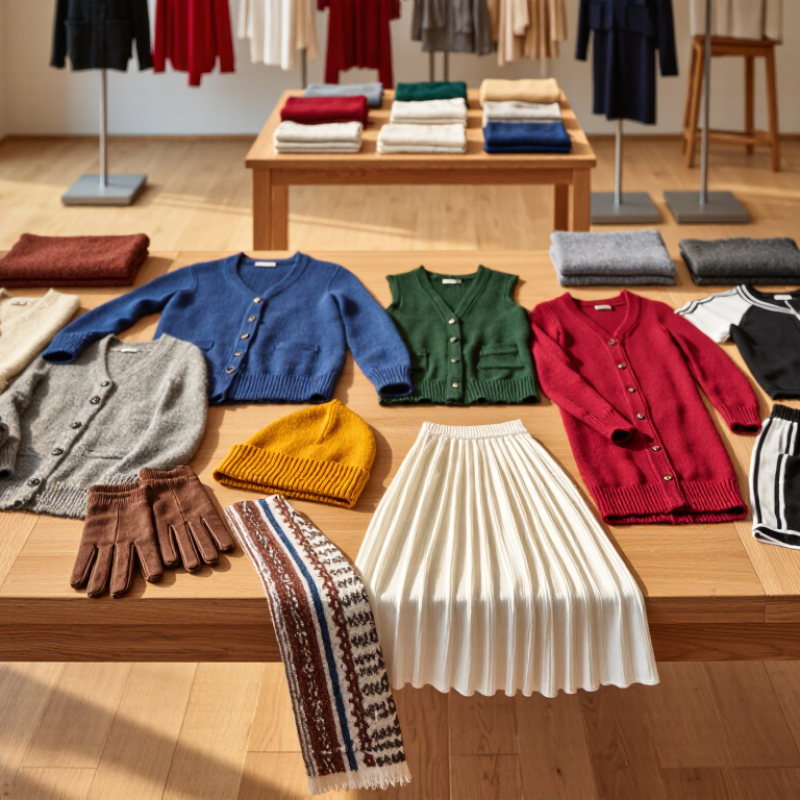
Cardigans and vests give global buyers practical tools for building layered retail collections. They work across seasons, climates, and customer age groups. A fine-gauge button cardigan suits office dressing, while a chunky textured style adds warmth and visual weight. Vests create easier layering without excessive bulk. They can sit over shirts, dresses, or lightweight knit tops.
For retail planning, examine yarn composition, stitch recovery, and seam strength before confirming quantities. Cotton blends feel breathable in warmer markets, while wool blends offer better insulation for colder regions. Recycled fibers may support sustainability goals, but buyers should request clear material documentation. A simple fit block can reduce sampling delays. Check armholes carefully. Tight openings can make layering uncomfortable.
Color planning also matters. Neutral cardigans often support repeat purchases, while seasonal shades refresh the collection. Vests in oatmeal, charcoal, or deep green can connect separate product groups on the sales floor. Test garments after washing, especially around cuffs, buttons, and shoulder seams. Small faults become expensive when multiplied across large orders. Not every oversized silhouette will sell equally well. I have seen generous fits attract attention but create return concerns when measurements lack clarity. Size charts should include garment length, chest width, and armhole depth. Buyers may also consider adjustable hems or reversible constructions, although extra details can increase production complexity. A balanced collection usually needs dependable basics, a few textured pieces, and room for regional preferences.

 +86 15968093247
 CONTACT NUMBER
 CONTACT e-mail