+86 15968093247


Denim Skirts remain a practical fashion category, but global buying decisions are rarely simple. A skirt may look identical online, yet differ sharply in fabric weight, stretch recovery, wash consistency, and grading. These details affect comfort, repeat orders, and return rates.
Grand View Research valued the global denim jeans market at approximately USD 77.15 billion in 2023. It forecasts continued growth through 2030, supported by casualwear demand and changing consumer preferences. Denim skirts are not measured separately in every report. That limitation matters. Buyers should avoid treating broad denim growth as guaranteed skirt performance.
Amy Leverton, founder of Denim Dudes, describes denim as “a global language with local dialects.” Her point is useful for international sourcing. A dark, rigid A-line skirt may suit one market, while a soft, faded mini may perform better elsewhere. Cultural fit matters.
This guide presents ten practical buying tips for Denim Skirts. It covers fabric composition, weight, stretch, waist construction, sizing, wash development, trims, quality control, packaging, and supplier communication. Small details decide outcomes.
Check the waistband.
A supplier’s sample can hide weaknesses. Test it after washing, sitting, and repeated movement. Request measurable specifications, not attractive adjectives such as “premium” or “soft.” Ask for shrinkage data, colorfastness results, and size tolerance records.
The International Textile Manufacturers Federation and Cotton Incorporated both emphasize fiber performance, traceability, and responsible production in modern textile purchasing. Still, reports cannot replace physical inspection. A buyer may follow every checklist and miss an uncomfortable rise or uneven hem. That is the imperfect part. Good sourcing requires evidence, comparison, and repeated reflection.
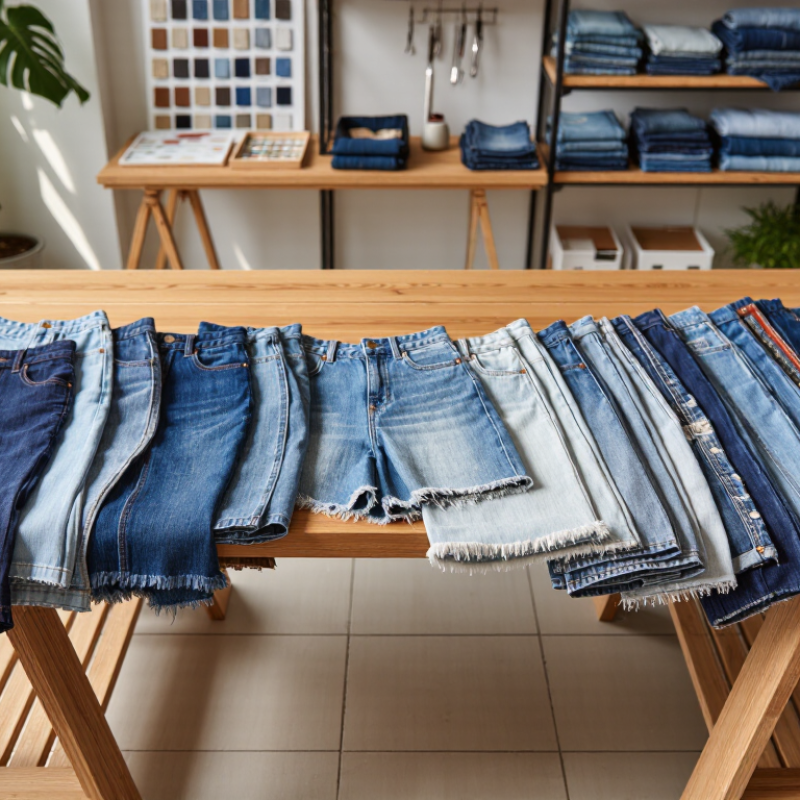
Global buyers should define a denim skirt’s purpose before reviewing washes or trims. A skirt for schoolwear needs modest length, durable stitching, and easy movement. A weekend fashion segment may prefer slits, fading, or asymmetric hems. Workwear buyers often choose dark indigo, clean lines, and stable sizing. The use determines the product brief.
Price should match the customer, not only the factory quote. Entry-level shoppers may accept lighter denim and fewer details. Mid-market customers usually expect softer fabric, stronger zippers, and consistent measurements. Premium buyers may require heavier denim, refined hardware, and careful finishing. Low price is not automatically good value. Unexpected returns can erase the saving.
My own buying mistake was judging samples under bright showroom lights. The color looked even, but daylight revealed patchy fading. I now check samples outdoors, measure the waistband twice, and test sitting comfort. Buyers should request size sets, wash specifications, fabric weight, and pre-shipment inspection records. A clear tolerance chart helps prevent arguments over length and hip measurements. Market feedback still matters. One survey may miss local fit preferences, especially between regions. A practical plan compares customer use, target price, fabric performance, and expected order volume before production begins.

When buying denim skirts globally, compare fabric weight before judging style. Lightweight denim, around 6–10 oz, feels cooler and bends easily. It suits warm climates, travel collections, and A-line skirts with movement. Check the fabric recovery after sitting. Thin denim can stretch at the waist and lose shape. A softer hand is useful, but excessive softness may indicate weaker structure.
Heavyweight denim, around 12–16 oz, offers stronger coverage and a firm silhouette. It works well for cooler markets, utility designs, and skirts needing lasting shape. Hold a sample against light. Dense fabric should reduce transparency, especially in pale washes. Ask for shrinkage data after washing, not only the original measurements. I once approved a heavy sample that looked excellent, but the waistband tightened after laundering. That mistake changed my inspection process.
Request weight confirmation from a consistent fabric test method. Compare the same skirt size, since trims and panels can affect total weight. Examine seam strength, zipper operation, pocket attachment, and hem stability. Lightweight fabric may need reinforced stress points. Heavy fabric may require wider seams and stronger stitching. Consider freight volume, drying time, and local customer preferences. A 16 oz skirt can feel impressive, yet uncomfortable in humid weather. A 6 oz skirt can feel practical, yet disappoint buyers seeking winter durability. Test both weights through wear, washing, and movement. No chart replaces a physical sample.
10 Denim Skirt Buying Tips for Global Buyers
Verify Fit, Sizing, and Shrinkage Through ISO 6330 Wash Testing
Denim skirts can change shape after washing. Waistbands may tighten, while hems can twist slightly. ISO 6330 provides controlled domestic washing and drying procedures for textile testing. Ask an independent laboratory to test the skirt using the intended care method. Record the machine cycle, water temperature, detergent, drying process, and conditioning time. Small details matter.
Tips: Measure the waist, hip, skirt length, hem opening, and pocket position before and after washing. Test more than one size, fabric lot, and shade when possible. A single sample can look perfect. Production variation may tell another story. Fit testing should use a real body form or model, not only a flat measurement chart. Compare the results with your approved tolerance for each size.
A practical report should show percentage shrinkage and dimensional change. Check whether stretch denim recovers after movement, especially around the seat and waistband. Review seam appearance, zipper function, and puckering under normal light. ISO 6330 testing improves purchasing decisions, but it cannot imitate every household. That limitation deserves attention. Repeating the test after a revised wash or fabric change can prevent expensive size disputes.
Colorfastness should be checked before approving bulk denim skirt production. AATCC TM61 uses accelerated laundering to assess color change and staining. ISO 105-C06 evaluates similar washing performance under specified laboratory conditions. These methods are useful, but they are not identical. Test results should not be compared casually.
Ask the supplier for recent laboratory reports linked to the exact fabric lot. Check the testing temperature, detergent, cycle, and number of washes. Dark indigo denim deserves closer attention. Rub a damp white cloth across the waistband, side seams, and hem. Visible transfer may reveal uneven dye fixation. I have seen acceptable reports fail during small retail trials, often because production fabric changed later.
Buying tip: request testing before shipment, not only during sampling. Confirm whether the report measures color change, staining, or both. A pale pocket lining can expose dye migration quickly. Wash one finished skirt in your own facility when possible. Record water temperature, detergent amount, and drying method. Small differences can alter the result.
No test is perfect. AATCC TM61 is accelerated, so it does not fully reproduce every consumer wash. ISO 105-C06 also requires careful interpretation. Ask for the applicable performance limit and buyer specification. Keep sealed fabric samples for comparison. This simple step helps identify problems when bulk goods look different. Pay attention to inconsistent stitching too, because seam abrasion can increase visible fading.
When buying denim skirts globally, verify the fiber claim before comparing prices. GOTS “Made with Organic” products generally require at least 70% certified organic fibers. The exact label category matters. Do not accept “organic cotton” wording alone. Request a valid scope certificate from the supplier and a transaction certificate for the specific shipment. Check fiber percentages, processing sites, and certificate validity dates. Review the skirt’s label, hangtag, and invoice together. They should tell the same story.
REACH compliance needs separate attention. It covers chemical restrictions in products sold into the European market. Ask for recent laboratory reports covering dyes, azo substances, nickel release, formaldehyde, phthalates, and listed SVHCs, where relevant. The report should identify the fabric, trims, test methods, and production batch. Metal buttons and zippers deserve inspection. They often create avoidable problems. An EU importer may carry the legal responsibility, but suppliers must provide reliable technical evidence. A generic “REACH certificate” is not enough.
Request samples before placing a bulk order. Rub the dark denim with a white cloth. Check odor, color transfer, stitching tension, and shrinkage after washing. I once focused too heavily on fiber percentages and overlooked a rough waistband edge. The paperwork was strong, but the product experience was weak. That mistake still matters. Certification supports trust, yet physical quality and traceable documents must agree. Keep every report, certificate, and approval sample in one purchasing file.