Why Choose Lace Fabric for Your Fashion Projects?
Lace Fabric can give a garment softness, texture, and a sense of occasion without relying on heavy embellishment. A narrow lace trim may sharpen a sleeve edge, while a full lace panel can create a lighter, more open silhouette. The effect depends on the pattern, fiber, and construction—not just the look in a product photo. Fashion designer Yves Saint Laurent famously said, “Fashions fade, style is eternal.” His remark was not about lace specifically, but it offers a useful lens: choose details that support the design beyond a passing trend.
Start with the project’s needs. For a fitted bodice, check stretch, recovery, and seam stability. For a veil or overlay, examine drape and transparency against the actual lining fabric. Hold a sample near a window. Pull it gently. Check whether the motifs distort or the edges fray. Small tests matter.
There is a trade-off. Delicate lace can look refined, yet snag easily during sewing or wear. A denser pattern may last longer, but it can feel stiff or hide the garment beneath it. Neither option is automatically better. Match the lace to the wearer, use, and care requirements, then test a swatch before ordering yardage. Even experienced makers can misjudge scale from a screen. A lovely sample may behave differently once cut, lined, and stitched. That deserves a second look.
What Lace Fabric Is and How It Is Made
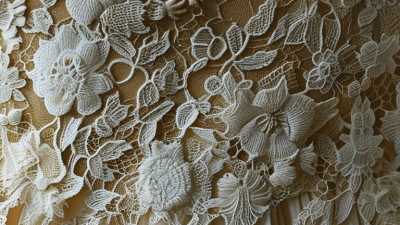
Lace is an openwork fabric: yarns form a patterned network of holes, loops, and decorative motifs rather than a solid surface. It can be made from cotton, silk, linen, or synthetic fibers, depending on the desired drape, texture, and care needs. Needle lace is built with a needle and thread, while bobbin lace is formed by crossing and twisting threads wound around small bobbins. Machine-made lace is commonly produced on warp-knitting machines, where needles and guide bars create repeating patterns quickly and consistently. The method affects the fabric’s feel and appearance. A close-up may reveal tiny variations in thread tension.
Textile Exchange’s Materials Market Report 2024 estimates global fiber production reached 124 million tonnes in 2023, with polyester accounting for about 57 percent. These are industry-wide figures, not lace-specific production data, but they show why fiber choice matters when assessing textile materials. In manufacturing, lace is formed, then checked for pattern defects and uneven edges; dyeing or finishing may follow. For a fashion project, hold the fabric against light and gently stretch a sample. Open areas can snag, and delicate motifs may lose shape during handling. A test swatch is useful, though it cannot predict every outcome.
Common Types of Lace Used in Fashion
Lace is not a single material; its structure changes how it drapes, stretches, and handles during sewing.
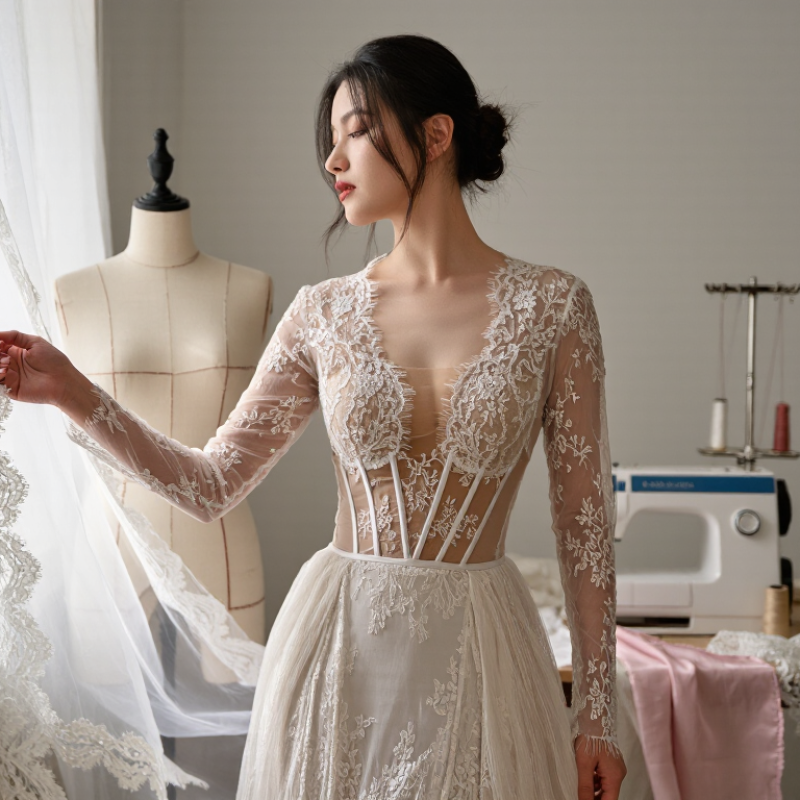
Chantilly lace is lightweight, with delicate floral motifs on a fine net ground. It suits overlays, sleeves, and soft veils, but its open mesh can snag on rough jewelry or unfinished seams. Handle it gently.
Guipure lace has heavier motifs linked by stitched bars rather than a continuous net. Its bold texture works well on collars, cuffs, and focused panels, though bulky joins may feel stiff against the skin.
Alençon lace is known for raised, corded outlines that give motifs definition and a subtle dimensional edge.
Embroidered tulle adds stitched designs to a sheer net base, offering detail without the weight of dense lace.
Stretch lace, often blended with elastic fibers, moves comfortably in fitted garments and lingerie-inspired pieces. Check its recovery before cutting; some samples relax more than expected.
I still find that a small swatch test prevents avoidable surprises, especially when matching lace edges across a seam.
Key Design Benefits of Lace Fabric
Lace fabric adds texture without relying on heavy prints or bold colors. A floral motif can soften a structured sleeve, while geometric lace gives a simple skirt sharper definition. Hold the fabric against a window and its openwork becomes part of the design: light passes through, creating subtle layers over skin or lining. Light, but expressive.
Lace also offers useful variety in scale and density. Fine patterns suit collars and cuffs, while larger motifs can anchor a bodice or panel. Scalloped edges may work as a hem finish, saving extra trim and keeping the outline delicate. For a cleaner result, match the lining to the lace’s base tone and test the combination under daylight; contrast can look stronger than expected. Small details matter.
The fabric does require planning. Open areas can stretch or snag during handling, and some designs need careful placement so motifs meet neatly at seams. Not always easy. Before cutting, check the direction of the pattern and leave room to align prominent flowers or borders. A sample seam helps reveal whether the lace gathers, shifts, or feels too stiff for the intended silhouette. These checks take time, but they make the finished piece feel considered rather than merely decorative.
Why Choose Lace Fabric for Your Fashion Projects?
Typical Moisture Regain of Fibers Used in Lace (%)
Fiber choice can influence how a lace garment handles moisture. Cotton, linen, silk, and rayon typically absorb more moisture than nylon and polyester. These are approximate standard textile reference values; actual results vary with fiber processing, finishes, and test conditions.
Fashion Projects Suited to Lace
Lace suits fashion projects that benefit from texture, transparency, or carefully placed detail. It works beautifully on evening dresses, bridal separates, blouses, and statement sleeves. A narrow lace panel can soften a plain neckline; a full overlay creates a more formal look. The right choice depends on the garment’s structure. Fine, lightweight lace drapes well, while firmer lace can hold a defined collar or cuff. It is not always easy to sew. Open patterns may fray, stretch, or snag under a presser foot.
Material selection matters in an industry producing at enormous scale. Textile Exchange’s Materials Market Report 2024 estimates that global fiber production reached 124 million tonnes in 2023, with production projected to reach 160 million tonnes by 2030. These figures cover fibers broadly, not lace specifically, but they underline the value of choosing materials thoughtfully. For a lace project, consider fiber content, durability, care instructions, and whether the fabric needs a lining. Test a small sample first. That step can reveal puckering or color differences before cutting the garment.
Tips: Match lace stretch to the pattern, and stabilize seams with fine stitching. Place motifs by hand before sewing. Keep scraps nearby for testing. A little extra planning helps; sometimes the pattern still shifts.
Why Choose Lace Fabric for Your Fashion Projects? - Fashion Projects Suited to Lace
| Fashion Project |
Lace Type to Consider |
Why Lace Works |
Practical Considerations |
| Wedding and occasion dresses |
Chantilly lace or corded lace |
Fine motifs and openwork can add detail and texture to bodices, sleeves, overlays, or hems. |
Check transparency and place a suitable lining beneath areas where more coverage is needed. |
| Blouses and tops |
Lightweight floral lace or cotton lace |
Lace can create decorative panels, yokes, or sleeves while keeping the design visually light. |
Use stable seam finishes and consider a camisole or partial lining for sheer sections. |
| Fitted tops and dancewear |
Stretch lace with elastane |
Its added stretch can support close-fitting designs and allow greater freedom of movement. |
Choose a lace with stretch and recovery suited to the pattern; test seams before construction. |
| Skirts and dress overlays |
Soft floral lace or tulle-backed lace |
An overlay can add pattern and dimension without requiring a heavy outer fabric. |
Plan the lining and hem together, and handle the fabric gently to avoid snagging delicate motifs. |
| Casual summer garments |
Eyelet lace |
Its regularly spaced openings create a distinctive decorative surface that suits blouses, dresses, and skirts. |
Consider the size and placement of the openings, and pre-wash fabric if its care instructions allow. |
| Structured statement garments |
Guipure lace |
Its connected motifs and more substantial appearance can make it effective for panels and bold overlays. |
It may feel heavier or less fluid than fine lace, so check drape and seam bulk on a sample. |
| Accessories and decorative details |
Beaded lace or embroidered lace |
Embellished lace can provide concentrated detail on cuffs, collars, veils, clutches, or bodice accents. |
Account for added weight and inspect embellishments when choosing seam placement and care methods. |
How to Choose and Handle Lace for a Project
Why Choose Lace Fabric for Your Fashion Projects?
Choose lace by matching its structure to the garment, not just its pattern. For a fitted sleeve, stretch lace may move more comfortably than a stiff, embroidered variety. For a skirt overlay, check how the motifs fall when the fabric hangs. Hold a sample against the lining color and in daylight; transparency can look different indoors. Small details matter.
Check the fiber content, width, and care instructions before buying enough fabric. Order a swatch if possible, then wash or steam it as the finished piece will be treated. Some lace shrinks or loses shape. A test can reveal that early. Measure motif repeats, too, so seams do not cut through prominent flowers or leave an awkward mismatch.
Lace can snag, fray, and shift while cutting. Use a fresh rotary blade or sharp shears, and cut one layer at a time on a stable surface. Tissue paper beneath delicate lace can reduce slipping. Handle gently. Pin inside seam allowances, or hand-baste before machine stitching. Choose a fine needle and test the stitch on scraps. Even careful planning can miss a flaw; inspect the fabric under bright light before cutting. I would not assume every lace behaves neatly—some edges still need patient finishing.

 +86 15968093247
 CONTACT NUMBER
 CONTACT e-mail