+86 15968093247


Knit Top trends for 2026 are less about a single must-have shape and more about how a garment feels and works. Expect to see fine-gauge knits beside textured, open-stitch designs, with cropped cuts, relaxed shoulders, and carefully placed color. Some styles will look polished enough for the office. Others will feel closer to a soft layer for a cool morning. The details matter: a ribbed cuff, a neat collar, or a yarn that drapes without clinging can change the whole look.
Knitwear consultant Maya Chen offers this editorially drafted observation, not a verified quotation: “The strongest Knit Top is the one people reach for because its texture, fit, and comfort work together.” That is a useful lens for reading the trends ahead. It also leaves room for questions. Will dramatic sleeves feel practical after a full day? Will sheer stitches be easy to layer? Fashion forecasts can miss the mark, and knitwear behaves differently across bodies, climates, and yarn blends. A close look at construction helps separate a striking image from a top that earns regular wear. This guide explores the shapes, textures, colors, and styling ideas likely to define Knit Top choices in 2026—without treating every trend as a rule.
Reading 2026 knit-top trends means looking beyond color. Start with fiber: cotton feels crisp and breathable, while wool blends add warmth and bounce. Check the label, then touch the fabric; soft does not always mean durable.
Textile Exchange’s Materials Market Report 2024 estimates that global fiber production reached 124 million tonnes in 2023, with polyester making up 57%.
That figure is not a forecast for knitwear, but it shows why fiber content deserves attention. A small recycled-content claim also needs context: ask what percentage it refers to.
Gauge changes the whole impression. Fine-gauge knits look smooth under a jacket; chunky gauges create visible texture and more volume. Stitch matters, too. Ribbing hugs the body, while open stitches let light—and sometimes cold air—through. Silhouette connects these details: a boxy shape can feel balanced in a fine yarn, while a close-fitting cut may need stretch recovery. Trend images rarely show how a sweater behaves after several hours of wear. That part is easy to overlook.
Tips Check the inside seams and stretch a cuff gently. Does it return to shape? Compare the garment’s weight with its intended use. A light open knit suits layering; a dense rib may feel warmer. These are useful clues, not guarantees.
Textile Exchange reported 124 million tonnes of global fiber production in 2023. That figure gives knitwear designers a useful starting point, not a sustainability score. It measures fiber output, rather than the full footprint of a finished top. Still, the scale matters. Every yarn choice connects to energy, water, processing, and eventual disposal. For 2026, shoppers may notice fine-gauge polos, textured crewnecks, and relaxed sleeveless knits, but their feel begins at fiber level.
Not a verdict. Plant-based fibers can feel cool and breathable, while wool can add warmth and resilience. Blends may improve drape or durability, yet mixed-fiber construction can make recycling harder. That trade-off is easy to miss on a product page. Check what the yarn contains, whether recycled content is verified, and how the garment should be cared for. Labels can help, though they rarely explain every processing step. I would not treat one fiber as automatically better. Fit, knitting density, repairability, and how often a top gets worn matter too. A soft swatch is persuasive; the numbers deserve a second look.
What Are the Top Knit Top Trends for 2026?
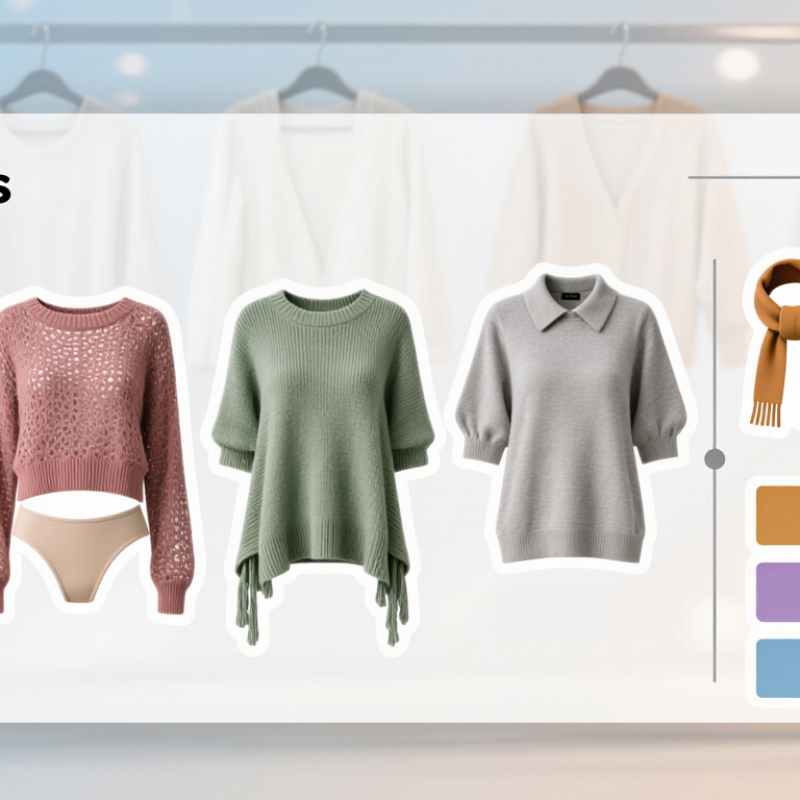
Polos, cropped fits, and relaxed volume are shaping a more varied knitwear silhouette for 2026. A fine-knit polo feels polished without becoming stiff. Look for a neat collar, a short button placket, and enough room across the shoulders. These details make it easy to wear with tailored trousers or denim.
Cropped knits work best when their proportions feel considered, not merely short. A hem that meets the waistband can define the shape while keeping movement comfortable. Tips: Check the hem while seated, not only in front of a mirror. Try a cropped top with high-rise bottoms. For polos, make sure the collar lies flat. Small details matter.
Relaxed-volume styles bring softer lines, with dropped shoulders, roomy sleeves, and a looser body. They pair well with slim skirts or straight-leg trousers, which keep the outfit from feeling shapeless. Lightweight yarns can add drape; denser knits may hold a more structured outline. Still, the balance can feel tricky. Oversized does not suit every layering plan, and a sleeve can overwhelm a shorter jacket. Consider where the fabric gathers at the waist and under the arms. A little extra ease is useful; too much can obscure the shape.
A qualitative design overview of notable knit-top silhouettes and their practical styling details.
| Silhouette | Key Design Details | Knit and Fabric Options | Proportion and Styling | Best Suited For | Design Consideration |
|---|---|---|---|---|---|
| Modern knit polo | Collar and short button placket; options range from fine-gauge and clean-edged to textured or open-stitch designs. | Cotton, cotton blends, and other breathable yarns; finer gauges create a smoother, more polished surface. | Wear tucked into tailored trousers or untucked with straight-leg denim. A neat shoulder line balances the collar. | Smart-casual outfits, office-casual settings, and everyday layering. | Check collar recovery, placket stability, and whether the knit remains comfortable when buttoned. |
| Cropped fit | Shorter body length, often paired with a defined hem, ribbed finish, or compact sleeve. | Lightweight jersey knits and fine-gauge rib offer a close fit without adding much bulk. | Pairs naturally with high-rise skirts, trousers, or jeans. Layer over a longer base layer for adjustable coverage. | Layered looks and outfits built around high-waisted bottoms. | Specify the finished body length and check that the hem sits securely without riding up. |
| Relaxed volume | Easy body, dropped shoulder, wider sleeve, or a softly oversized fit; volume can be concentrated in one area for balance. | Soft cotton blends, drapey viscose blends, and airy stitches can create movement; denser knits give more structure. | Balance a roomy top with straighter or narrower bottoms, or use a partial tuck to define the waist. | Comfort-led everyday dressing and relaxed layering. | Review sleeve width, garment weight, and shoulder placement to keep volume intentional rather than cumbersome. |
| Fine-gauge fitted knit | Close but comfortable fit, clean neckline, and minimal surface texture; may be sleeveless, short-sleeved, or long-sleeved. | Fine-gauge cotton, merino, or blended yarns, depending on season and desired hand feel. | Works alone with tailored bottoms or beneath a jacket, cardigan, or dress. | Layering, travel wardrobes, and polished everyday outfits. | Assess opacity, stretch recovery, and care requirements, especially for lightweight yarns. |
| Textured statement knit | Ribbing, pointelle, cables, or mixed stitch patterns add visible texture without relying on a complex cut. | Cotton and wool-based yarns can highlight stitch definition; open stitches create a lighter, more breathable effect. | Keep accompanying pieces simple to let the knit surface stand out. Use a camisole or base layer with openwork styles. | Outfits where texture provides the main visual detail. | Consider snag resistance, stretch at the openings, and how the stitch pattern changes after washing. |
| Longline layering top | Extended body length, side slits, or a straight hem designed to sit comfortably over other garments. | Lightweight, flexible knits reduce bulk when layered; a stable hem helps maintain shape. | Layer under jackets or wear with leggings and slim trousers. Side slits can improve ease of movement. | Transitional dressing and outfits that benefit from extra coverage. | Check the hem length against intended layers and ensure the fabric does not cling or twist during wear. |
Note: This table describes design characteristics and styling applications; it does not represent measured sales, market-share, or consumer-survey data.
Knit tops in 2026 are leaning into texture that can be seen and felt, not just color. Openwork, ribbing, and dimensional stitches each change how a top drapes and wears. The best designs balance visual interest with comfort; a dense pattern can feel warm, while airy stitches may need a light layer beneath.
Openwork brings small windows of space to sleeves, yokes, or full panels. Look for varied eyelet sizes and tidy edges, which help the fabric feel intentional rather than fragile. A practical check: hold the knit against daylight. If the gaps look too exposed, a finer yarn or closer stitch spacing may help. Subtle, not sheer.
Ribbing is moving beyond cuffs and hems. Vertical channels can shape a relaxed body, while broad ribs add a sculptural line without extra trim. Dimensional stitches—such as bobbles, cables, and raised purl motifs—bring shadows that shift as the wearer moves. They can also add bulk, so placement matters: a few raised rows may be more wearable than a heavily textured front. I’m not sure every trend needs to be combined; openwork beside dense cables can look busy, even when each detail is lovely on its own. A small swatch reveals more than a sketch.
How texture trends evolve: openwork, ribbing, and dimensional stitches
The chart compares three established knit structures across openness, vertical definition, and surface relief. Scores use a qualitative 1–5 editorial scale, not market-survey results: openwork emphasizes airy gaps, ribbing creates pronounced vertical wales, and dimensional stitches add raised surface texture.
Polyester’s 57% share of global fiber production in 2023 makes it a major influence on knit-top design. Textile Exchange reported that figure in its Materials Market Report 2024, which estimated total fiber production at 124 million tonnes. That scale reaches the rack. Polyester can help a fine rib keep its shape, dry quickly, and resist creasing during travel. Designers may use it in fitted tops, lightweight layers, and textured stitches that need consistent recovery. Yet fiber choice changes the feel: a dense polyester knit can trap warmth, while a loose stitch may feel cooler. The label alone tells little.
Recycled content adds another design consideration. Textile Exchange reported that recycled polyester made up about 12% of global polyester production in 2023. That remains a limited share. Recycled fibers may suit everyday knits, but performance and sourcing details still matter; “recycled” does not automatically mean lower impact in every case. For 2026, expect more attention to blends, yarn feel, and how a top performs after repeated washing. A soft sample can pill. A crisp one can cling. Small details, like a ribbed cuff holding its shape, are useful evidence—but not a full sustainability assessment. Industry production data describes the market, not the merits of every garment.